
Dental Implants in Hyderabad
Dental implants are a commonly used option for replacing missing teeth and restoring normal oral function. An implant acts as a stable foundation for a dental crown, bridge or other restoration, depending on the patient’s needs. Unlike removable dentures, an implant-supported restoration is designed to remain securely in place.
The suitability of dental implants depends on several factors, including the condition of the gums and jawbone, the number and location of missing teeth, oral hygiene and overall health. A dental examination and appropriate imaging help the dentist determine whether implant treatment is suitable and which approach may be appropriate.
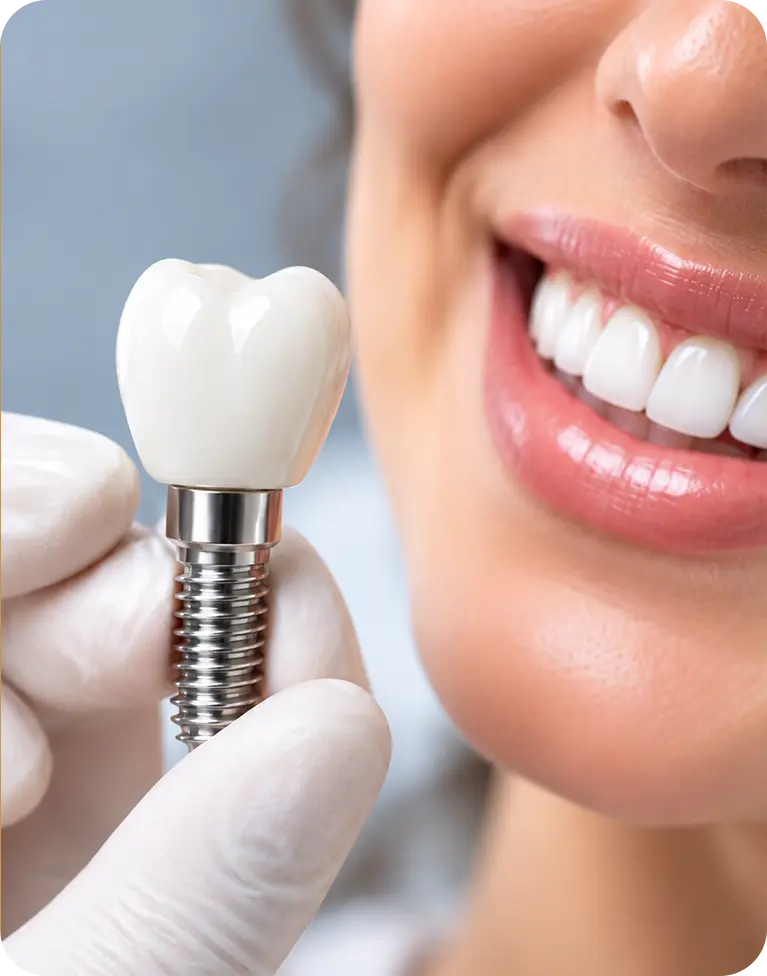
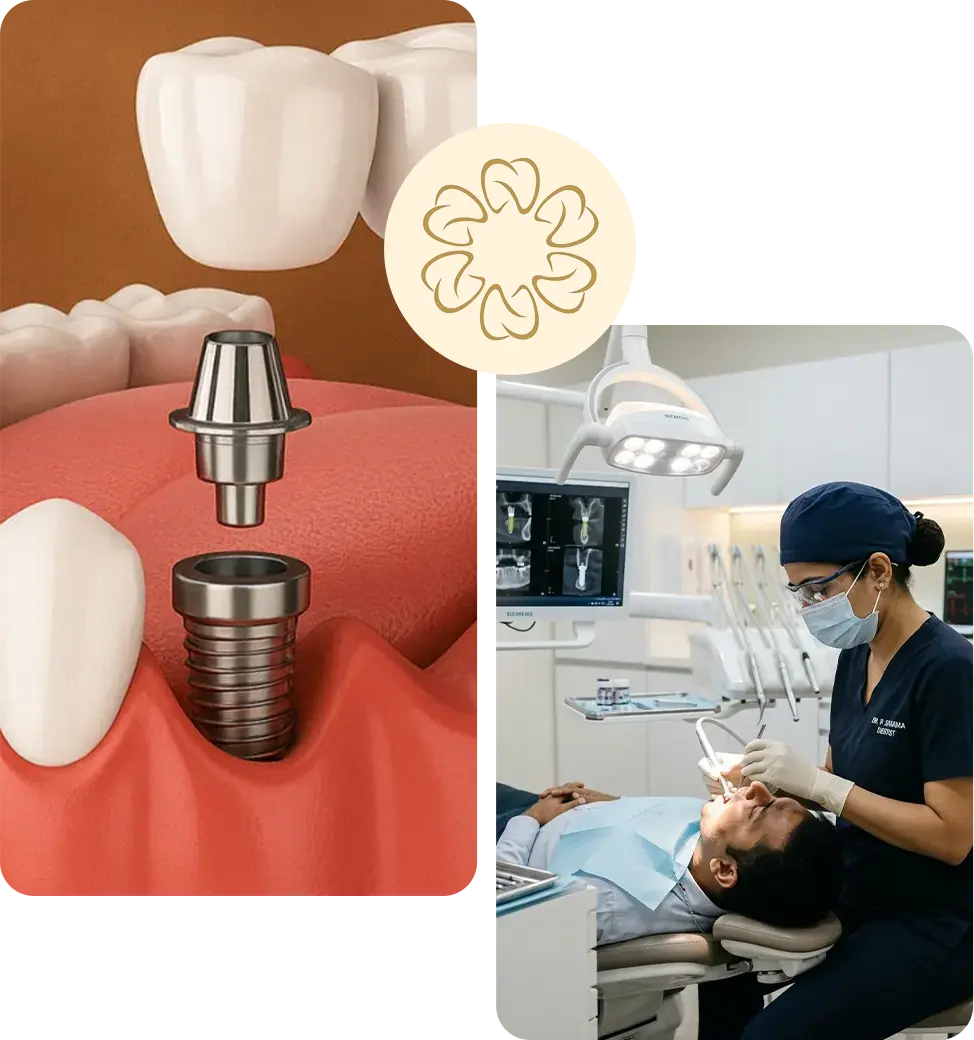
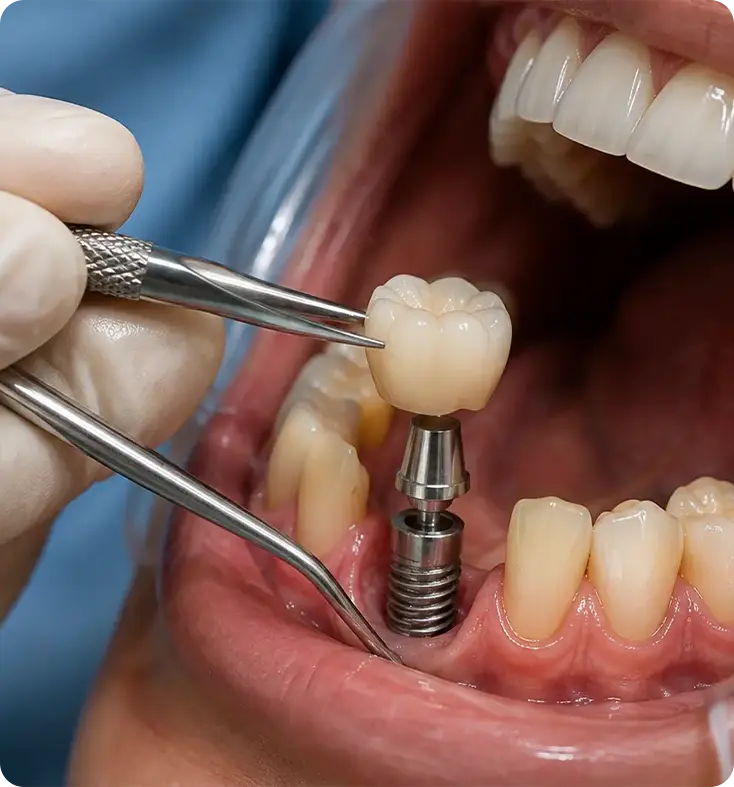
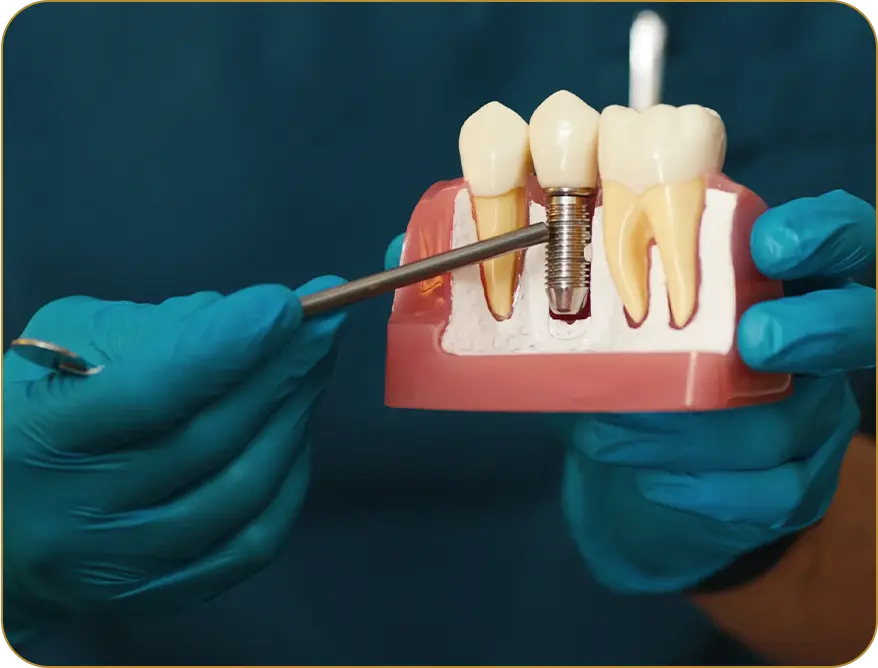
A dental implant is a small implant component that is placed into the jawbone to provide support for a replacement tooth. After the implant has undergone a healing and integration period, it can be connected to a dental restoration using an abutment.
A completed implant restoration generally consists of:
The component placed within the jawbone.
The connector between the implant and the restoration.
Crown or restoration
The visible replacement tooth or teeth.
Dental implants may be considered for patients who have lost one or more teeth due to tooth decay, gum disease, injury or other dental conditions.
They may be an option for patients who:
- Have a single missing tooth
- Have multiple missing teeth
- Have difficulty chewing because of missing teeth
- Want a fixed replacement for a missing tooth
- Are looking for an alternative to certain removable dentures
- Require support for an implant-supported bridge or other restoration
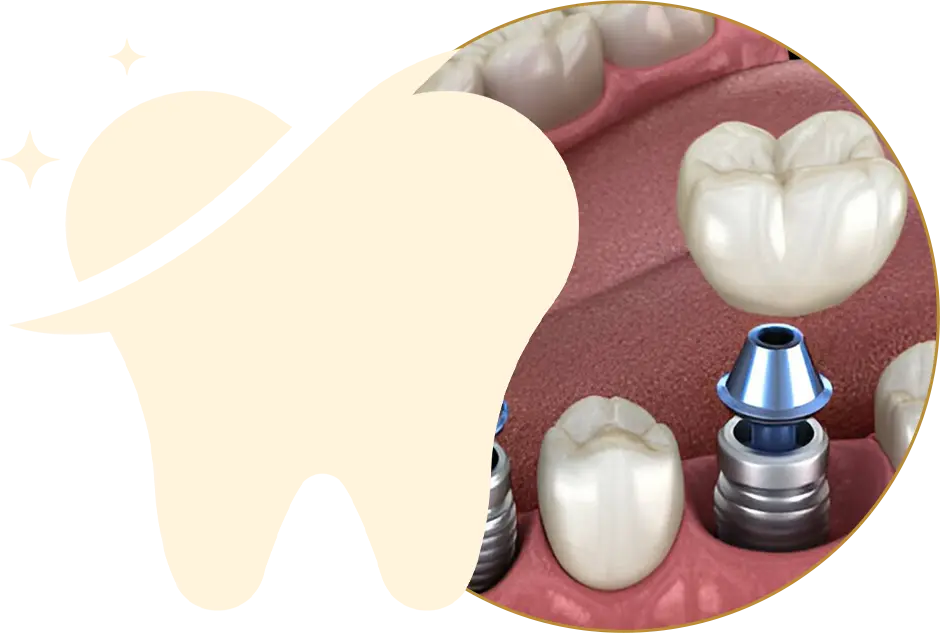
A single missing tooth can affect chewing and may also affect the appearance of the smile. Depending on the clinical situation, an implant-supported crown may be considered for replacing the missing tooth.
The treatment generally involves placing an implant in the area of the missing tooth, allowing it to heal, and subsequently attaching a crown to restore the visible portion of the tooth.
The surrounding teeth, gum condition and available bone are considered when planning treatment.
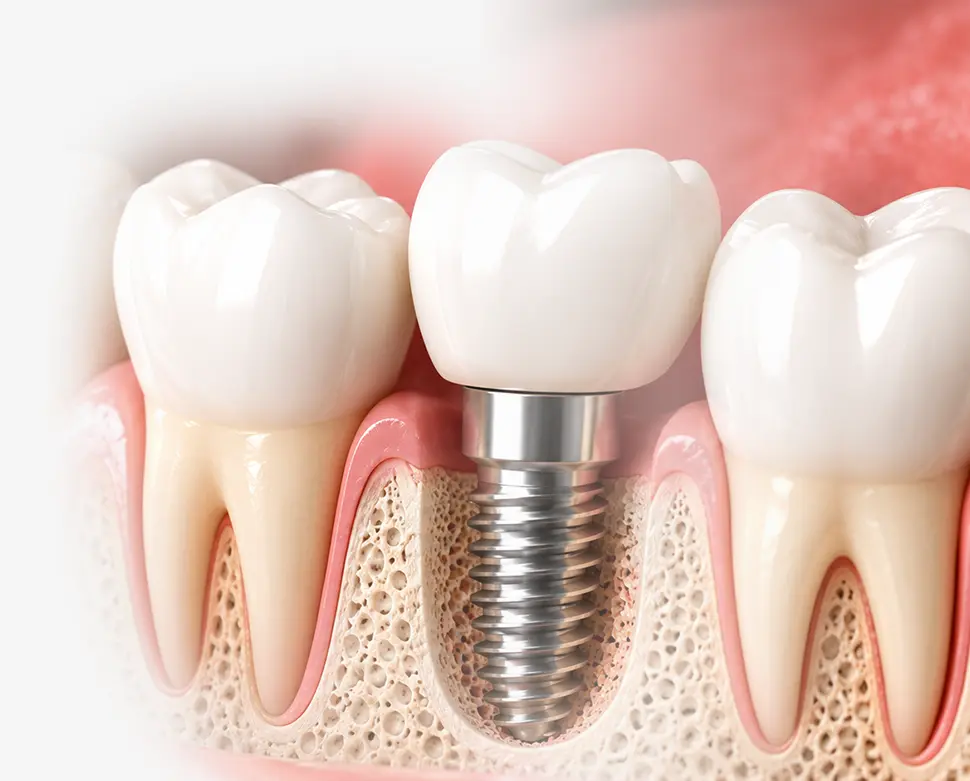
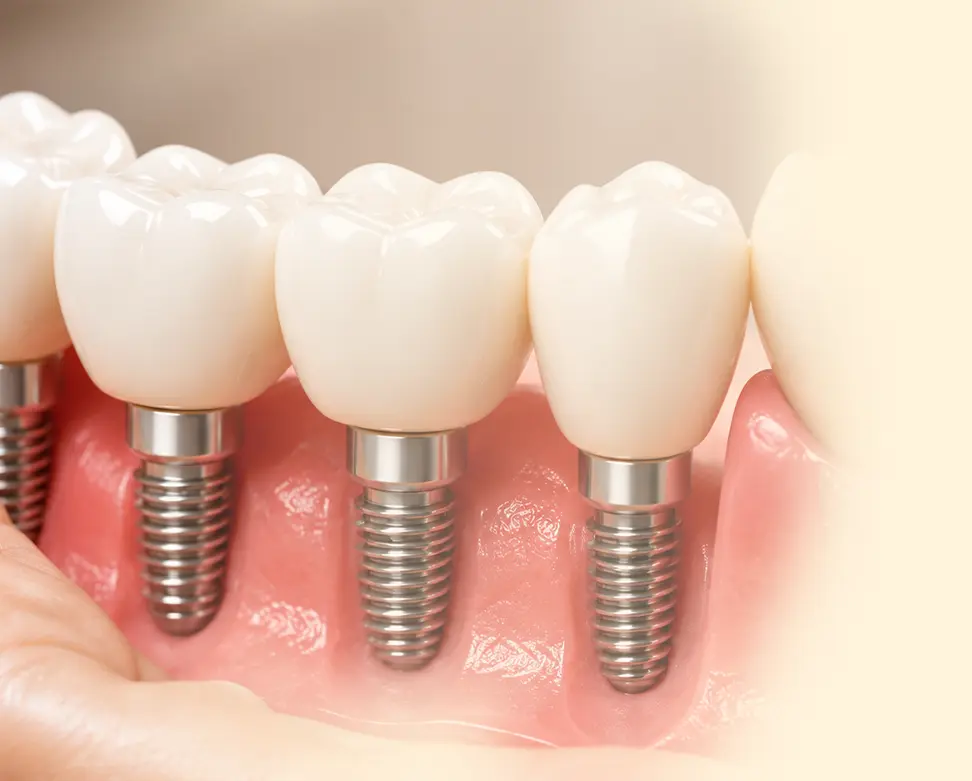
Patients with several missing teeth may require a different implant treatment plan. Depending on the number and position of missing teeth, implants may support individual restorations, bridges or other implant-supported solutions.
The number of implants required is not necessarily the same as the number of missing teeth. Treatment planning depends on the patient’s anatomy, restoration requirements and clinical assessment.
There are several ways to replace missing teeth, including implants, bridges and dentures.
Implants are placed into the jawbone and can support crowns, bridges or other restorations
A bridge replaces one or more missing teeth and is supported by adjacent teeth or implants, depending on the type of bridge.
Dentures are removable appliances used to replace some or all missing teeth.
Each option has different treatment requirements, benefits and limitations. The appropriate choice depends on factors such as the number of missing teeth, gum health, bone condition, oral hygiene, overall health and personal preferences.
A dental consultation is necessary before deciding which replacement option is appropriate.
The cost of dental implants in Hyderabad can vary significantly between patients because implant treatment is customized according to individual clinical requirements.
The overall cost may include several components, such as:
- Implant component
- Abutment
- Dental crown or restoration
- Consultation
- Dental imaging and diagnostics
- Treatment Planing
- Bone grafting, when clinically required
- Gum treatment or other additional procedures, when required
- Temporary restorations, where applicable
Patients may come across different dental implant prices when comparing clinics. However, a headline price may not always represent the complete treatment cost.
Some quotations may refer only to the implant component and may not include the crown, abutment, imaging or additional procedures.
Before beginning treatment, patients can ask the dental clinic for an itemized estimate that clearly explains what is included.
For detailed information about the factors that influence treatment pricing, see our Dental Implant Cost in Hyderabad information.
Dental implant placement is generally performed under local anaesthesia. Patients should discuss any concerns about discomfort or anxiety with their dentist before the procedure.
Some swelling, sensitivity or discomfort may occur after treatment. The dentist may provide appropriate post-operative instructions and medications depending on the procedure.
The amount of discomfort and recovery can vary depending on the extent of treatment and the individual patient.
Dental implant treatment does not always involve a single appointment. The overall timeline can depend on factors such as:
- Number of implants
- Bone Condition
- Gum health
- Need for additional procedures
- Healing and Integration
- Type of final restoration
Some patients may require additional treatment before implant placement, while others may be able to proceed according to a more straightforward treatment plan.
Your dentist can provide a more specific timeline after examination and imaging.
Dental implants are intended to provide long-term tooth replacement. Their longevity can depend on oral hygiene, gum health, regular dental care, the condition of the restoration and individual health factors.
Good oral hygiene and regular dental check-ups are important for maintaining the implant and surrounding tissues.
Patients should continue brushing, cleaning between teeth and following the maintenance instructions provided by their dentist.
Dental implants are not automatically suitable for every patient. The dentist needs to assess the condition of the gums and jawbone as well as the patient’s overall oral health.
Patients with insufficient bone or certain oral health problems may require additional treatment before implant placement. In some cases, an alternative tooth-replacement option may be recommended.
This is why an individual examination is important rather than relying only on general information about implant treatment.

Dental implant treatment requires careful assessment, treatment planning and restoration. At Hasya Dental Care, patients can discuss their missing-tooth concerns and understand the available replacement options following a clinical evaluation.
Information about the treating dentist, prosthodontic or oral surgery qualifications, experience and relevant credentials should be included here based only on verified clinic information.
Patient reviews, treatment photographs and before-and-after cases may also be added where appropriate and where patient consent has been obtained.
Dental implant cost varies depending on the number of teeth being replaced, implant system, crown or restoration, diagnostics and any additional procedures required. An examination is needed to provide an individualized estimate.
Healing time varies between patients. The implant generally requires a period of healing and integration with the surrounding bone before the final restoration is placed. Your dentist can provide an estimated timeline after assessing your case.
The procedure is generally performed under local anaesthesia. Some discomfort, swelling or sensitivity may occur after treatment. Your dentist will provide appropriate post-treatment instructions.
Not everyone is immediately suitable for dental implants. Bone condition, gum health, oral hygiene and overall health are considered before treatment. Additional procedures may sometimes be required before implant placement.
Dental implants are designed for long-term use, but their longevity varies between individuals. Maintaining good oral hygiene, caring for the restoration and attending regular dental check-ups can help maintain the implant and surrounding oral tissues.
If you have one or more missing teeth and are considering dental implants, a consultation can help you understand whether implant treatment is suitable for you.
The dentist can assess your oral health, discuss available tooth-replacement options, explain the treatment process and provide an estimate based on your individual requirements.